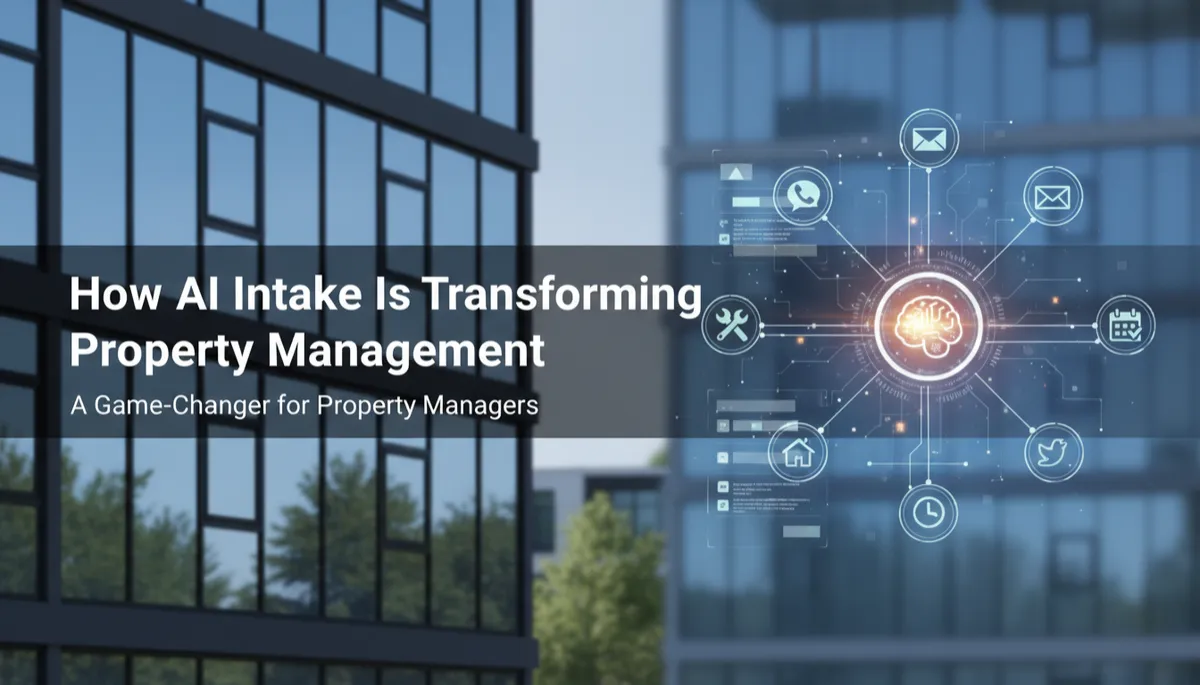
AI Intake Revolutionizes Property Management
Property Management, AI Intake, Leasing, Maintenance
How AI Intake Is Transforming Property Management
Phones ringing nonstop, inboxes overflowing, and residents texting at all hours — for many property managers, this is daily life. AI intake is changing that reality by handling the flood of leasing inquiries, maintenance requests, after-hours calls, and appointment scheduling so humans can focus on higher‑value work and resident relationships.

1. Tackling Leasing Inquiry Overload with AI Intake
Leasing season can feel like a tidal wave: calls, emails, texts, Facebook messages, Zillow leads, and pings from every listing site. Prospects ask the same questions repeatedly — rent, pet policy, parking, availability, move‑in dates — and expect immediate answers. When your team is juggling tours, renewals, and vendor coordination, it is easy for leads to slip through the cracks.
AI intake systems act as a 24/7 leasing assistant across all channels. Using natural language processing, they can understand and respond to inquiries in real time, whether they arrive by phone, web chat, SMS, or social media. According to multiple industry analyses, AI‑powered chat and virtual assistants are already improving tenant communication and boosting conversion rates in property management and real estate leasing.
- Answer common questions instantly: AI provides accurate, consistent information on pricing, availability, amenities, pet policies, utilities, application criteria, and lease terms — without waiting for a human to pick up the phone.
- Qualify renters automatically: The system can ask about move‑in timeframe, budget, household size, pets, and income, then determine whether a prospect meets your criteria before they ever speak with staff.
- Schedule tours on the spot: Once qualified, prospects can select from real‑time availability on your team’s calendar, whether for in‑person or virtual tours, with confirmations sent immediately.
- Send applications and follow up: AI intake can text or email application links, nudge prospects who started but did not finish, and send reminders before application deadlines or special promotions expire.
Imagine a Saturday afternoon at a busy apartment community: instead of missing calls while your team is out on tours, AI intake responds to every leasing inquiry, pre‑qualifies prospects, and fills your Monday calendar with confirmed, high‑intent showings. That is the power of AI property management in the leasing funnel.
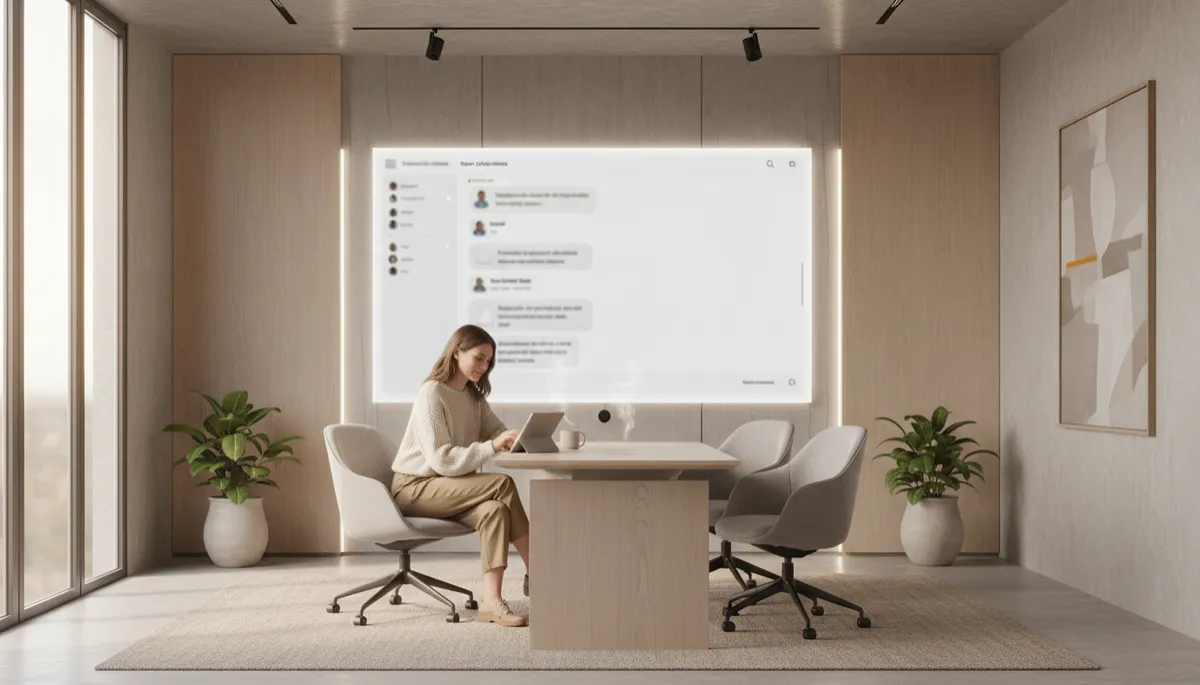
AI intake turns a flood of leasing inquiries into a focused pipeline of qualified prospects.
2. Transforming Maintenance Request Intake into a Strategic Advantage
Maintenance is where resident satisfaction is won or lost. Leaks, heating failures, broken appliances, access issues, and noise complaints come in around the clock. When requests arrive through multiple channels — phone, email, portal messages, text — it is easy to misjudge urgency or lose track of details, especially in peak seasons or across large portfolios.
AI intake centralizes and structures maintenance requests the moment they come in. Instead of a vague voicemail saying “the sink is broken,” you receive a fully documented ticket with priority level, photos, and the right vendor already notified. This aligns with broader trends in predictive maintenance and automated workflows highlighted by leading property management and real estate research.
- Categorize and prioritize automatically: AI asks clarifying questions — “Is there active flooding?” “Do you have heat at all?” — then labels requests as emergency, urgent, or routine, following your custom rules and service level targets.
- Create work orders instantly: The system populates your maintenance or ticketing platform with unit details, problem description, resident contact information, and any attachments, eliminating manual data entry.
- Collect photos and videos: Residents can text or upload images and videos that AI attaches to the ticket, helping technicians diagnose issues before arriving onsite and ensuring they bring the right tools and parts.
- Route emergencies to the right people: For true emergencies, AI intake can escalate instantly — notifying on‑call maintenance, sending instructions to residents (e.g., how to shut off a water valve), and logging the entire interaction for compliance.
Over time, aggregated data from AI‑captured maintenance requests can feed into predictive maintenance strategies: spotting recurring issues by building, system, or vendor and helping you invest proactively rather than reactively. That is not just operational efficiency; it is a direct lift to NOI and asset value.
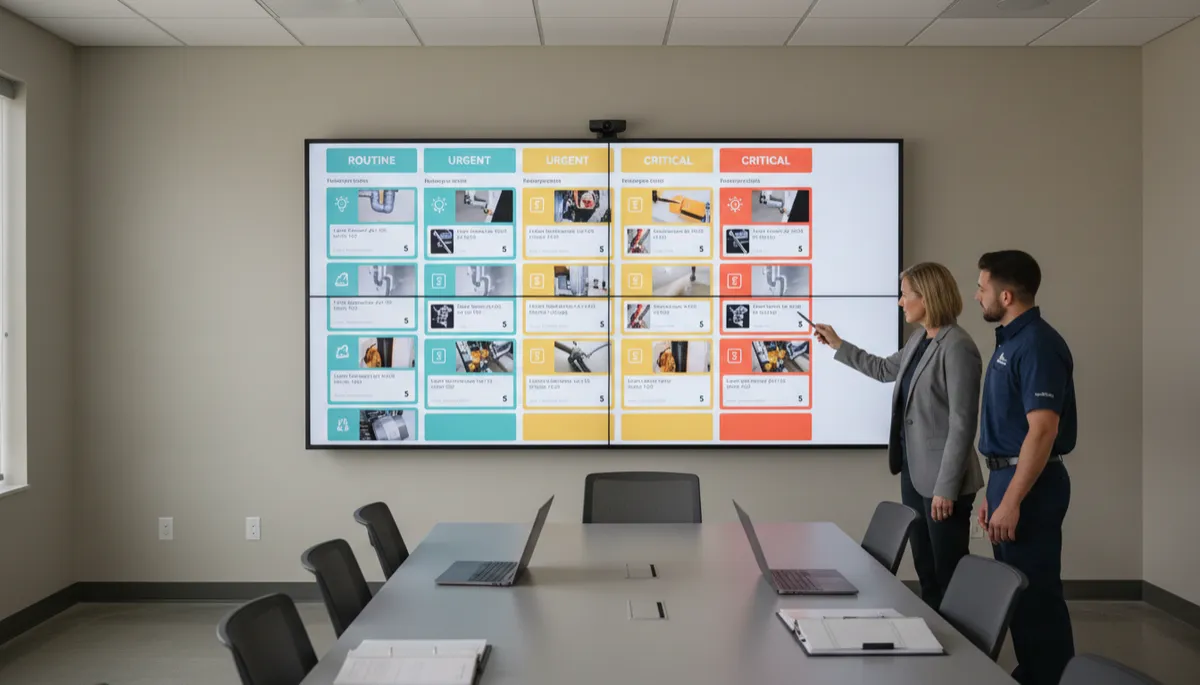
Structured AI intake for maintenance creates clarity, speed, and better decisions for every work order.
3. Reducing the Pain of After‑Hours Calls with AI Triage
Few things burn out property managers faster than after‑hours interruptions. A 2 a.m. call might be a genuine emergency — or it might be a non‑urgent noise complaint or a resident who misplaced their keys. Traditional answering services often lack context, misclassify issues, or simply pass along messages, leaving your team to sort through them the next morning.
AI intake offers intelligent triage for after‑hours calls and messages. Instead of a generic script, AI can reference your building policies, vendor contacts, and escalation rules to make smart decisions in real time.
- Distinguish emergencies from non‑emergencies: AI asks targeted questions to determine whether a situation meets your criteria for emergency response, reducing unnecessary wake‑up calls while still protecting residents and assets.
- Provide immediate guidance: For lockouts, plumbing issues, or power concerns, AI can walk residents through approved troubleshooting steps or policy‑based options (such as contacting a preferred locksmith).
- Escalate only when necessary: When an issue truly requires urgent attention, AI can call or text the on‑call technician, share the details it has gathered, and log the entire sequence automatically in your system.
The result is fewer middle‑of‑the‑night disruptions for your team, faster and more consistent responses for residents, and a documented, defensible process for handling risk‑sensitive situations — a combination many property managers find extremely attractive.
4. Automating Leasing Appointment Scheduling and Follow‑Through
Coordinating leasing appointments is one of the most repetitive tasks in property management. The back‑and‑forth emails, voicemails, and calendar checks consume hours each week — time that could be spent building relationships, managing renewals, or optimizing operations across your portfolio.
AI intake solutions are designed to remove this friction entirely. Once a prospect engages — whether from a listing site, your website, or a text campaign — the AI can handle the entire scheduling workflow end‑to‑end.
- Qualify before scheduling: AI confirms move‑in date, budget, unit type, and basic requirements so your team spends time only with viable prospects who match current or upcoming availability.
- Check calendars in real time: Integrated with your team’s calendars, AI offers only valid time slots, reducing double‑booking and manual rescheduling headaches.
- Send confirmations and reminders: Prospects receive automatic confirmations, directions, parking instructions, and reminders via text or email — dramatically lowering no‑show rates.
For busy leasing teams, the impact is immediate: fewer administrative tasks, more consistent follow‑up, and a smoother experience that prospects increasingly expect in a digital‑first rental market.
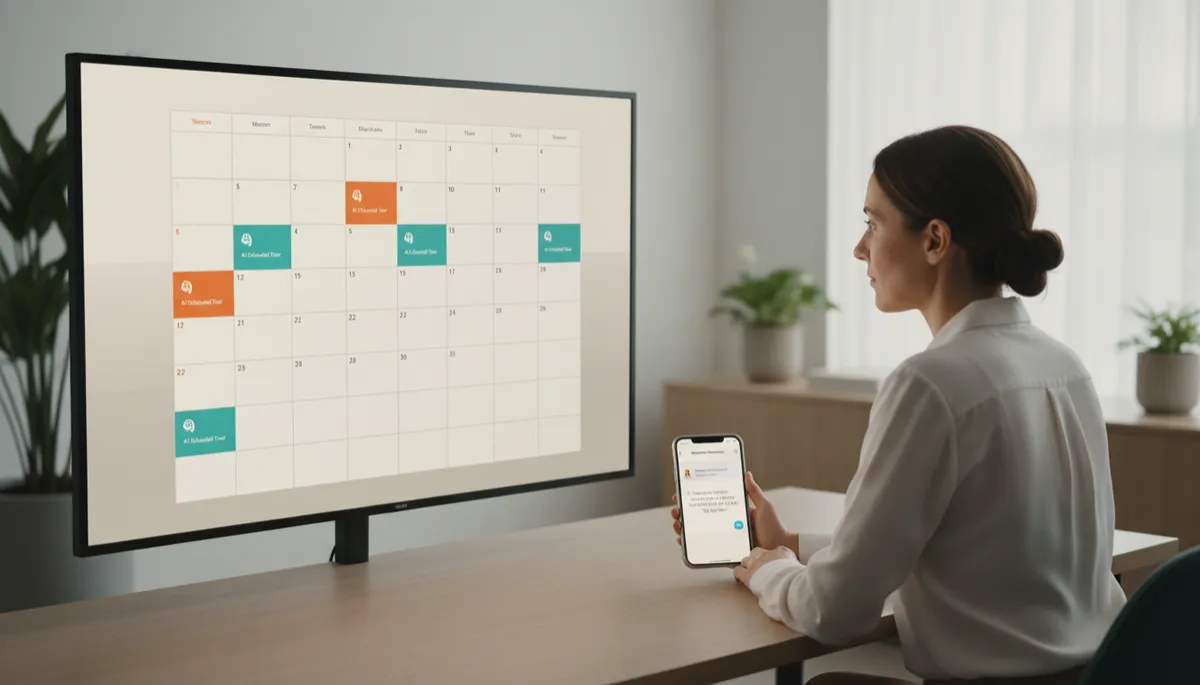
Automated appointment scheduling frees leasing teams from back‑and‑forth coordination and reduces no‑shows.
How Different Property Manager Types Benefit from AI Intake
Multi‑Family Property Managers
Multi‑family property managers often oversee multiple buildings or entire communities with hundreds of units. AI intake helps standardize processes across the portfolio: every leasing inquiry is answered consistently, every maintenance request is categorized the same way, and after‑hours calls follow uniform triage rules. This reduces variability between sites, shortens training time for new staff, and gives leadership clear data on performance, response times, and resident satisfaction trends.
Apartment Complex Operators
For operators focused on large apartment complexes, occupancy and reputation are paramount. AI intake ensures that no lead is ignored, even during peak leasing periods, and that maintenance requests are handled with visible professionalism. Automated updates — “Your work order has been created,” “Your technician is scheduled for tomorrow between 9 and 11 a.m.” — build trust and reduce inbound “status check” calls, allowing onsite teams to concentrate on tours, renewals, and community engagement.
Student Housing Management
Student housing is intensely seasonal and communication‑heavy. Leasing inquiries spike around application and move‑in periods, and residents are accustomed to texting and chatting rather than calling. AI intake fits perfectly here: it can manage high volumes of short, mobile‑first interactions, answer detailed questions about roommate matching, furnished units, and academic‑year leases, and coordinate group tours. On the maintenance side, AI helps filter out non‑urgent issues and reinforce community policies around noise, guests, and shared amenities, all while maintaining a friendly, conversational tone that resonates with students.
Short‑Term Rental Management Companies
Short‑term rental managers deal with constant guest turnover, late‑night arrival questions, and rapid‑fire maintenance needs. AI intake can function as a 24/7 digital concierge: confirming reservations, sharing check‑in instructions, answering questions about parking or Wi‑Fi, and triaging issues like cleaning problems or broken items. When something goes wrong between stays, AI can quickly notify housekeeping or maintenance vendors, attach photos from guests, and help keep tight turnaround schedules on track — all crucial for protecting ratings on major booking platforms.
Commercial Property Management
Commercial property management brings its own complexity: multiple tenants per building, specialized systems, and strict service level commitments. AI intake can differentiate between tenant types (retail, office, industrial), apply the correct response rules from each lease, and ensure that critical systems such as HVAC, elevators, and security receive priority handling. For leasing, AI can pre‑qualify prospects based on use type, square footage, and timing, then coordinate tours that include property managers, brokers, and prospective tenants without endless email chains.
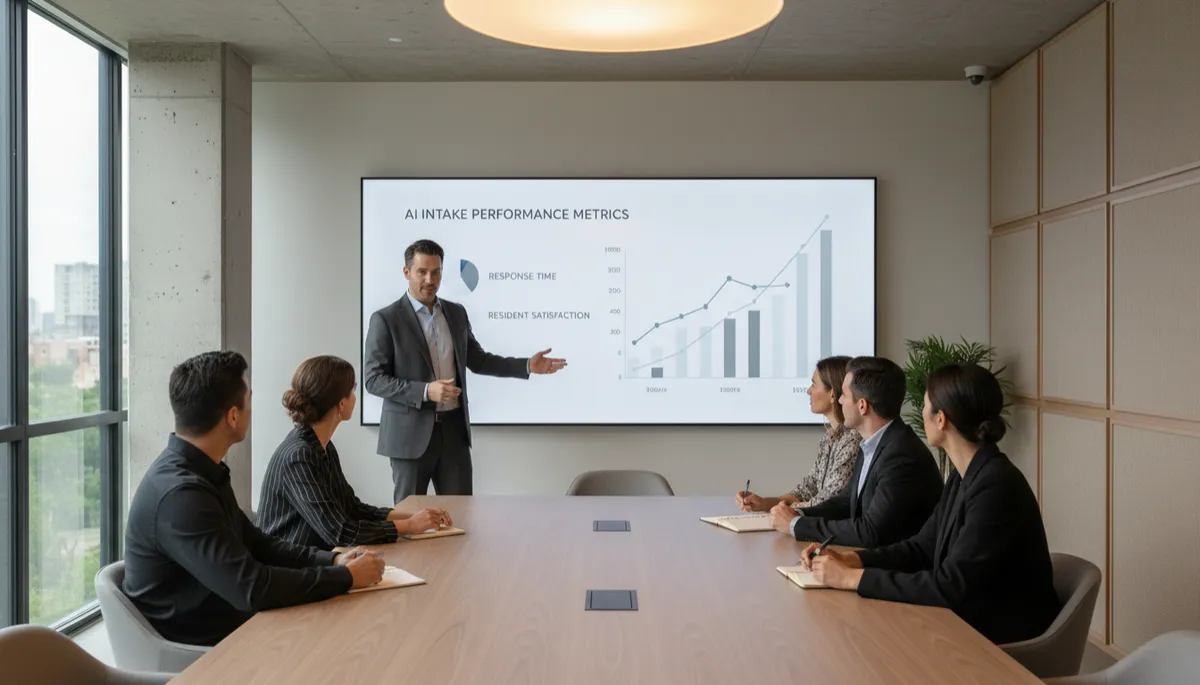
Clear AI intake metrics help stakeholders see the impact on service, costs, and occupancy.
Bringing It All Together
Across leasing inquiry overload, maintenance request intake, after‑hours calls, and leasing appointment scheduling, AI intake is reshaping what is possible in modern property management. Industry research points to a future — rapidly becoming the present — where AI and automation are not optional add‑ons but core infrastructure for efficient, tenant‑friendly operations.
For property managers of multi‑family communities, large apartment complexes, student housing, short‑term rentals, and commercial portfolios, the question is no longer whether AI property management tools will play a role, but how quickly you can put them to work. The portfolios that move first will benefit from faster response times, higher resident satisfaction, more predictable maintenance, and teams who are free to focus on strategy rather than constant firefighting.
Implemented thoughtfully, AI intake does not replace the human side of property management — it protects it. By taking over the repetitive, high‑volume front line, AI gives your team the time and clarity to deliver the personal, high‑quality service that keeps residents, tenants, and owners loyal for the long term.